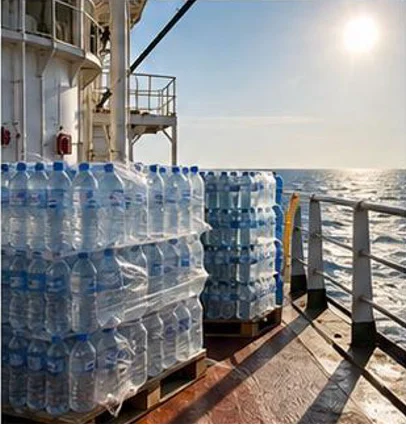
For decades, single-use bottled water has been a familiar part of life at sea. It provides crews with a convenient and trusted source of drinking water, particularly when there are concerns about the quality, taste or reliability of onboard potable-water systems.
But new research is adding another dimension to the conversation: what happens when the water we drink is stored in plastic packaging?
Recent scientific literature has detected micro- and nano-plastic particles in bottled water and identified several potential pathways through which packaging materials can contribute to particle and chemical exposure.
For the maritime industry, this raises an important question: can ships reduce their reliance on single-use bottled water by providing safe, reliable and trusted drinking water directly onboard?
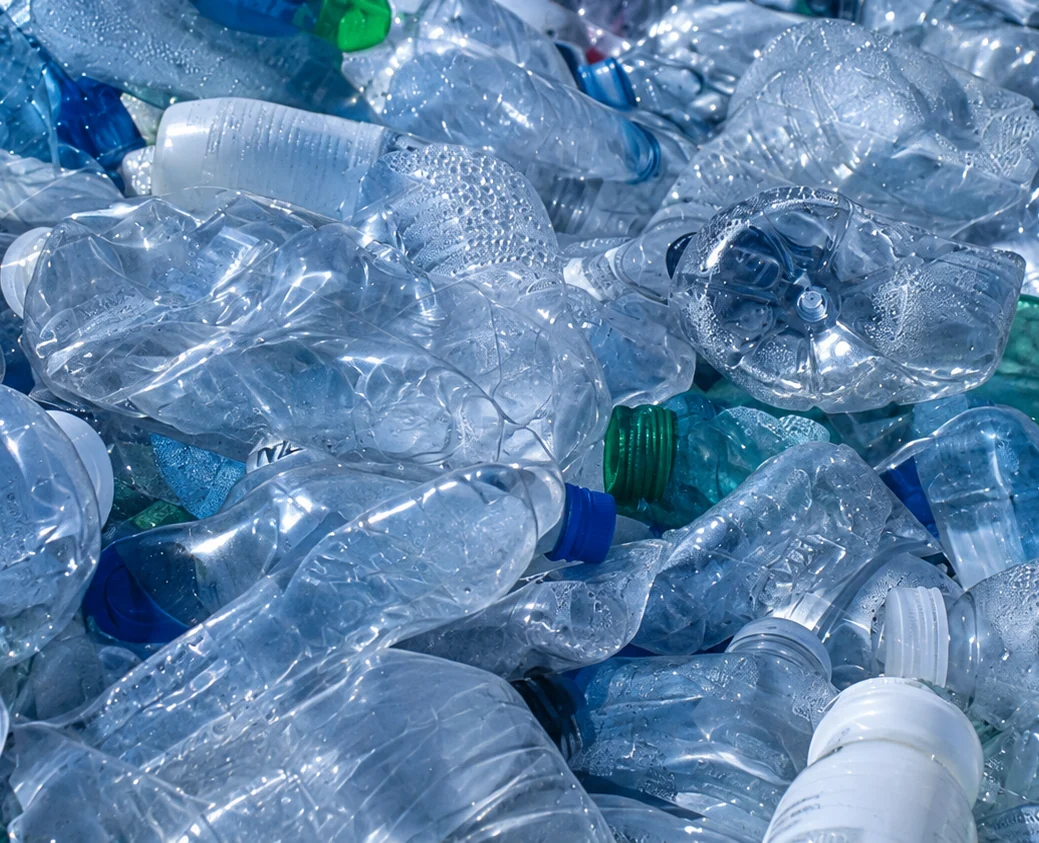
Microplastics and even smaller plastic particles, known as nanoplastics, have been detected in bottled water. Research suggests that some of these particles can come from the bottle itself, its cap and the way the bottle is handled.
1Introduction during resin production
2Particle generation during the process
3Mechanical stress, temperature, UV exposure
4Release from cap materials and friction
5Scratches, compression and repeated handling

But plastic is not only about the particles. Certain substances used in plastic packaging can also migrate into the water, while factors such as heat, sunlight, repeated opening and physical handling may contribute to their release.

Research is still investigating the potential long-term effects of this exposure. While current evidence does not establish that bottled water causes specific diseases, it does highlight a reason to reduce avoidable exposure where practical.
This is where the evidence requires careful interpretation.
Experimental research indicates that smaller plastic particles can interact with biological systems. Studies have investigated potential effects including oxidative stress, inflammatory responses, cytotoxicity, immune-system effects, changes to the intestinal microbiome, reproductive effects and neurological effects.
However, current evidence does not establish that normal consumption of bottled water causes specific chronic diseases in humans. The World Health Organization has likewise highlighted significant uncertainties surrounding exposure levels, toxicology and the characterisation of health risks.
A bottle of water consumed onboard does not necessarily go directly from the manufacturer to the crew. It may pass through manufacturing and bottling, warehousing, road transport, port storage, ship-chandler handling, quayside delivery, onboard storage and finally consumption. Along the way, it may encounter heat, sunlight, vibration and repeated physical handling.
These conditions overlap with several of the environmental and mechanical stressors identified in the scientific literature.

Direct sunlight on deck or near windows
High ambient temperatures in tropical regions
Storage in containers or enclosed spaces
Prolonged storage duration
Additional heat from nearby equipment or engines
Increasing temperature
increases the mobility of both the migrant and the PET polymer chains
However, there is an important distinction: there is currently no sufficient evidence to say that bottled water stored onboard ships systematically contains more micro- and nano-plastics than the same water consumed ashore. The maritime pathway is scientifically plausible, but a fleet-wide exposure increase has not been demonstrated.
The bigger operational question, therefore, is not whether bottled water at sea is automatically unsafe. It is whether shipping companies need to rely so heavily on single-use bottled water when another option is available: safe, monitored and trusted potable water produced and treated onboard.
Micro- and Nano-plastics from Single-Use Drinking-Water: an evidence review of plastic-particle exposure, PET packaging and maritime storage conditions, and the case for safe, trusted onboard drinking water.
Enter your details below to download the full technical white paper for free.
As research continues to highlight the need for greater attention to drinking-water quality and avoidable exposure from single-use plastic packaging, the maritime industry has an opportunity to rethink how potable water is provided onboard.
RWO, part of ERMA TECH GROUP, provides onboard fresh-water treatment solutions based on reverse osmosis, enabling vessels to produce potable water directly from seawater.
A semi-permeable membrane separates desalinated, demineralised water from salts, unwanted impurities and bacteria, providing a reliable source of fresh water onboard.
By producing potable water onboard, vessels can reduce their routine dependence on single-use bottled water while maintaining a safe and reliable supply for crew and passengers.
The result is a more practical approach to onboard water management: fresh water produced where it is needed, without relying on plastic bottles as the everyday solution.
Interested in onboard fresh-water generation for your fleet? Leave your details and our team will get in touch with you.